
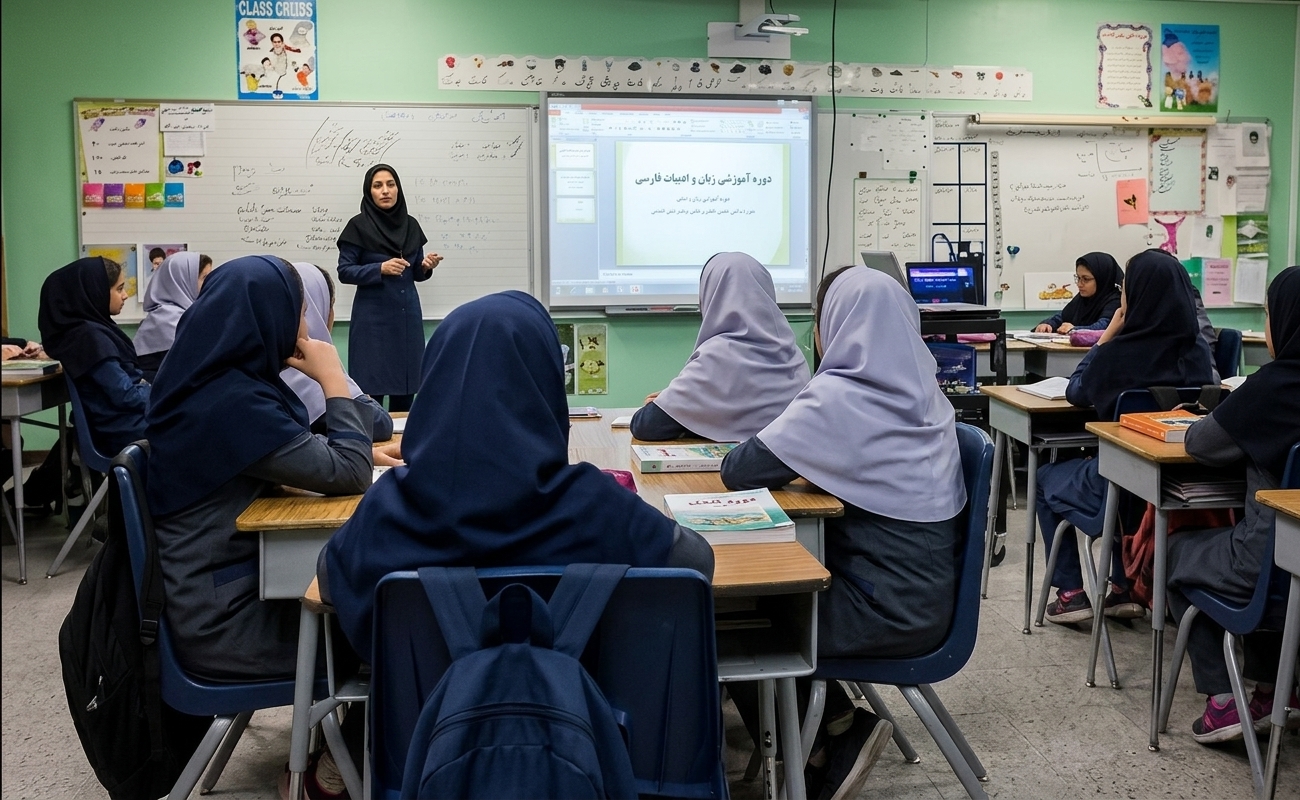
Immersive slide teaching
AI teachers explain concepts with structured visuals and paced progression.
AI-Powered Education · Orchestrated AI Classroom
MicroClass turns your topic or document into a reviewable lesson outline, then runs a structured session where an AI teacher, an assistant, and student personas work through it turn by turn. Scoped to your goal — not an open-ended chat that wanders.
Searching the web for up-to-date information
8%
A turn-based orchestrator runs an AI teacher, an assistant, and student personas that work through your lesson together — coordinated in sequence, each contributing to a structured session instead of a single back-and-forth chat.
AI reads your document or topic and generates a scoped lesson plan, slide content, and quiz questions calibrated to your level and time budget.
Each session ends with multiple-choice checkpoints that are graded automatically, giving you a clear, consistent read on what stuck — without waiting for an exam.
Every session leaves you with a structured in-app summary you can revisit, plus a portable session archive you can re-import and replay in MicroClass — not a throwaway chat log.
AI teachers explain concepts with structured visuals and paced progression.

Hands-on modules turn abstract theory into guided experimentation.

Debate, Q&A, and role-based collaboration happen in one session.
AI analyzes your input and sets an explicit learning boundary before the session starts — no prompt engineering, no drift, no hallucinated detours.
A two-stage AI pipeline: first a reviewable lesson plan, then agent-run scenes — slides, quizzes, simulations — each scoped and timed.
When the session ends, AI assembles a structured summary you can review in the app, plus a portable session archive you can export and re-import to replay the whole session — ready for exam prep or a second pass.
General chat AIs wait for prompts. MicroClass runs the whole lesson for you — plan, teaching team, slides, quizzes, and a replayable archive.
| Capability | ChatGPT | Claude / Gemini | Clear winnerMicroClass |
|---|---|---|---|
| Teaching structure | You steer an open chat | You steer an open chat | AI-planned classroom scenes |
| Who teaches | One model replies | One model replies | Teacher + assistant + student personas |
| Scope & time | Drifts off-topic easily | Drifts off-topic easily | Locked to your goal & time budget |
| Lesson plan | None — improvise mid-chat | None — improvise mid-chat | Reviewable plan before you start |
| Slides & scenes | Text only | Text only | Slides, sims, discussion scenes |
| Assessment | No real checkpoints | No real checkpoints | Built-in auto-graded quizzes |
| What you keep | A chat log | A chat log | Summary + replayable session archive |
If you want answers, use a chatbot. If you want a real study session that stays on track and proves what stuck — use MicroClass.
Start with MicroClassMicroClass sessions fit how undergrads and graduate students actually work: tight deadlines, assigned readings, labs, and group deliverables.
Map syllabus units, lecture PDFs, or past problem sets into a bounded review session with explicit learning goals—instead of an endless generic summary.
Prep for weekly readings: main claims, evidence, and likely discussion prompts, so you can participate with line-of-sight to the text.
Isolate one paper, proof sketch, or methods section and run a focused MicroClass session on definitions, assumptions, and what to verify next.
Before lab or a big assignment, rehearse procedures, edge cases, or debugging strategies in a structured session tied to the week's objectives.
Rehearse talks and anticipated faculty questions within a fixed scope—useful for thesis defenses, qualifying-style orals, and capstone demos.
Give everyone the same bounded outline from a shared PDF or spec so standups and milestones start from aligned understanding, not scattered notes.


MicroClass runs a structured, multi-step workflow: first it drafts a lesson outline you can review, then a turn-based team — an AI teacher, an assistant, and student personas — works through that outline scene by scene, and each session ends with quiz checkpoints that are graded automatically. A single chat model just responds to prompts; it doesn't plan a lesson, stay bound to it, or check what you actually learned.