
For ages 13–18

Pick a topic. The rest gets fun with AI.

A micro-class is one short, deep session—no filler. Your teachers and classmates are AIs, but the chat feels real—not a dry wall of text.

No school ID drama, no parents narrating your class. Just you and learning.

Session previewMicro Session
Preview of a live MicroClass session with students collaborating

Learning bar

Fills up as you actually get it

Foundations of algebra and functions•Geometry proofs and reasoning•Introduction to trigonometric models•Probability and statistical inference•Calculus basics: limits and derivatives•Calculus applications in motion•Linear equations and systems•Data visualization and interpretation•Scientific method and experiment design•Measurement uncertainty and error analysis•Classical mechanics: force and motion•Energy conservation principles•Waves, sound, and resonance•Optics: light, lenses, and imaging•Electric circuits and fundamentals•Magnetism and electromagnetic induction•Thermodynamics in everyday systems•Atomic structure and periodic trends•Chemical bonding and molecular shape•Stoichiometry and reaction balancing•Acids, bases, and pH analysis•Redox reactions and electrochemistry•Organic chemistry foundations•Cell biology and organelles•Genetics and inheritance patterns•Evolution and natural selection•Human physiology and body systems•Ecology and ecosystem dynamics•Climate systems and Earth science•Astronomy: stars, galaxies, and cosmology•Research reading and source evaluation•Academic writing structure and argumentation•Citation practices and plagiarism avoidance•Critical thinking and logical fallacies•Formal debate and evidence use•Historical thinking and chronology•Comparative political systems•Macroeconomics: inflation and growth•Microeconomics: markets and incentives•Financial literacy and budgeting•Introduction to computer programming•Algorithmic thinking and problem solving•Data structures for beginners•Web fundamentals: HTML, CSS, JavaScript•Cybersecurity fundamentals•Artificial intelligence foundations•Ethics of technology and AI•Digital citizenship and media literacy•Public speaking and presentation skills•Study strategies and memory techniques•Time management for students•Project-based learning methods•Engineering design process•Introduction to robotics•Geospatial literacy and map analysis•Global issues and sustainable development•

Three reasons to say “okay, I'll try it once”

Short and specific

Not a 40-hour course. One goal, one session, done. Like a quest—not a life simulator.

Interactive, not a PDF

Quizzes, discussion, maybe a weird little sim. Stuck? Ask—and the answer usually isn't just “Google it.”

You leave with something

A recap, review file, or something you can drop in the group chat—not just a vague “I learned” in your head.
Illustration of a teen leveling up through a boss-fight style challenge

One micro-class = one boss-fight for your brain

Up front you see exactly what you'll know by the end. Midway you check whether you really learned it. You finish with a wrap-up where you can honestly say “okay, I get this.” Still fuzzy? Re-open the same topic from a new angle—no judgment.

Boss cleared

HP bar = confidence meter (kind of)

Illustration of a teen exploring a topic through an interactive quiz

Mid-class, you don't stall—you check in.

Quick questions, instant feedback, no red grades in front of the whole room. (If you want to compete with friends later, we'll get there.)

Live Class Mission

Mission 1 of 3

Summarize the core concept in one sentence

Give one real-world use of this concept

Peek the vibe

Screenshot of a hands-on MicroClass lesson screen with a glowing, game-like UI

Weirdly hands-on scenes

Glowy UI, not a worksheet vibe.

Screenshot of a MicroClass quiz screen showing fast checks and clear feedback

Quizzes that don't feel like a trap

Fast checks, clear feedback.

What others said

“I thought quantum was only for physics PhDs. Twenty minutes later I realized I was wrong.”

— Elham, 16

“School project crunch time. MicroClass built a session from my PDF and saved me.”

— Amir, 17

“I finally understood derivatives because the class used graphs, motion, and quick checkpoints together.”

— Nila, 15

“I used one micro-class before a biology quiz and remembered way more than from rereading notes.”

— Sina, 16

“The debate-style history session helped me build arguments with evidence instead of memorizing random facts.”

— Arman, 17

“I like that I can repeat the same topic from a new angle until it actually clicks.”
— Yasmin, 14
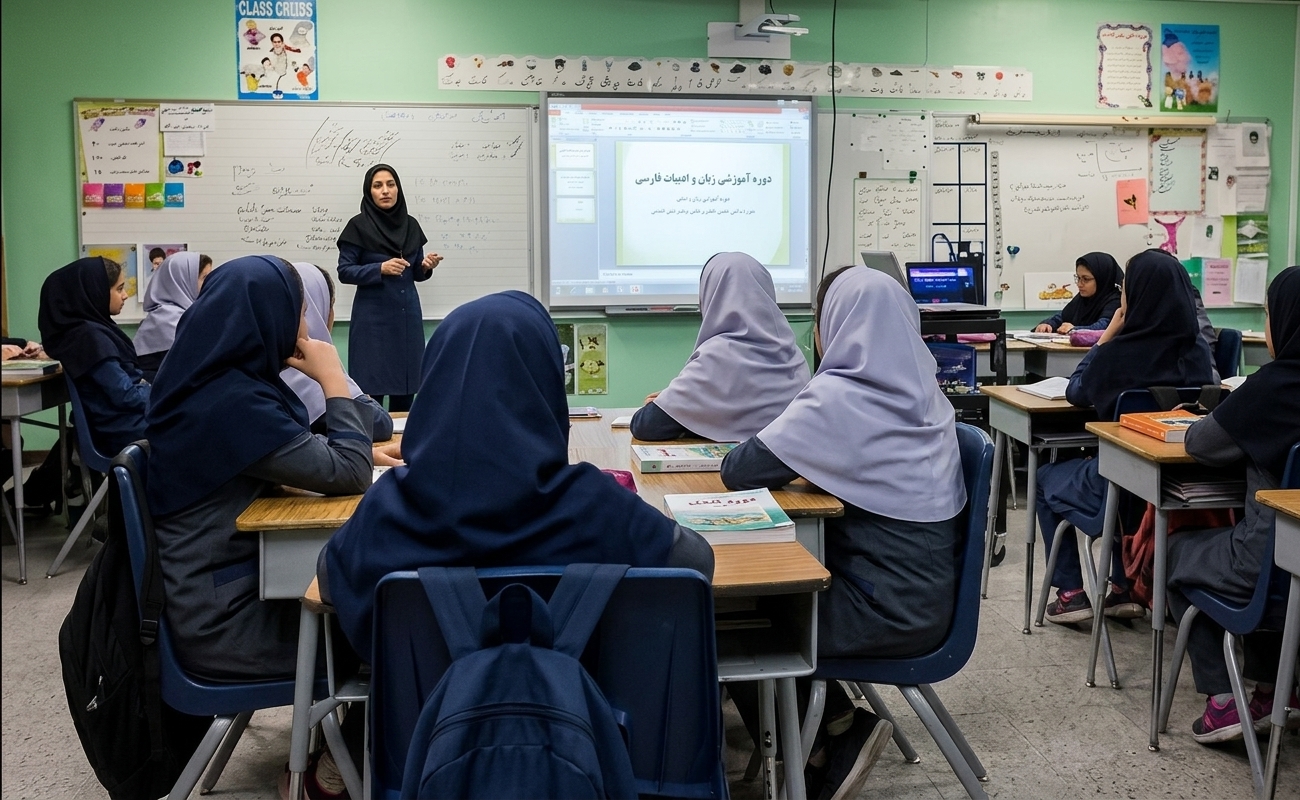
Group of students learning together with MicroClass

Quick FAQ

Do I need to enter a credit card? +

We designed the first experience so it's easy to start. Details come later.

Will my parents see what I learn? +

If you want, you can show them the recap. You're in control.

Is it English or Persian? +

Depends on your settings and class language—both are fair game.

How long is one micro-class? +

Most sessions are short and focused, usually around 15-30 minutes depending on your goal.

Can I repeat the same topic? +

Yes. You can revisit any topic and learn it from a new angle until it clicks.

Do I need to install anything? +

No heavy setup is required for normal use. Open the app, pick a topic, and start.

Will it help with school exams? +

It can support your prep with focused explanations and quick checks, but always verify key facts with class materials.

Can I switch language later? +

Yes. You can change interface and class language from settings at any time.

Ready to start microclassing today?

Start now